
Are south-facing solar panels a waste of money?
In New Zealand, the golden rule of solar installation is simple: face your panels north to capture the maximum amount of sunlight throughout the day. Because we are in the Southern Hemisphere, a north-facing roof provides the most consistent and intense solar exposure. However, many homes in Hamilton have complex roof lines, gables, or limited north-facing space. If your roof layout prevents a perfect north-facing installation, it does not necessarily mean your solar project is a write-off. While north is optimal, south-facing panels can still contribute significantly to your home energy needs.
Real-world performance: The Queenwood experience
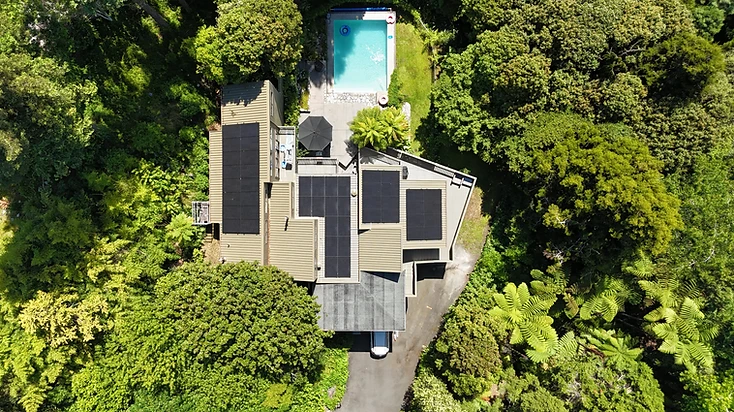
To understand the difference, we can look at data from a residential project in Queenwood, Hamilton. This property features a complex roof structure with panels installed across north-facing, flat, and south-facing orientations. It is important to note that this site currently operates with a 21.2 kW total DC panel capacity, utilising 46 panels across multiple levels and orientations, powered by two 10 kW single-phase inverters. This system has evolved over time to accommodate the constraints of the property.
Looking at the performance data monitored between 1 January and 30 September 2026, we can compare how the different orientations performed under Hamilton's weather conditions. During this nine-month period, the north-facing and flat array sections produced 7,713 kWh. In contrast, the south-facing array produced 3,082 kWh. Combined, the total generation for the monitored period was 10,795 kWh, with the south-facing panels contributing approximately 29% of the total energy generated. This demonstrates that while south-facing panels are less efficient, they are far from useless and can still play a meaningful role in your overall energy production.
Factors influencing your decision
Deciding whether to proceed with a south-facing installation depends on your specific goals and site conditions. Here are a few things we consider when assessing a home:
- Total energy usage: If you use a significant amount of electricity during the day, even a smaller contribution from a south-facing array can reduce your reliance on the grid.
- Roof pitch: A shallower pitch on a south-facing roof is often better than a steep one, as it captures more indirect sunlight.
- Shading: In Hamilton, trees and neighbouring buildings often have a bigger impact on your system than the roof direction itself. A shaded north-facing roof might perform worse than an unshaded south-facing one.
- Cost-benefit: If you are planning a system, the cost of adding extra panels on a south-facing roof can sometimes be offset by the long-term savings in power bills.
Maintaining your solar performance
Regardless of which way your panels face, the long-term output of your system depends on regular upkeep. There is no one-size-fits-all rule for maintenance. While rainfall helps wash away dust and pollen, it rarely removes stubborn contamination like bird droppings, grime near the panel frames, or organic growth from overhanging trees. We recommend monitoring your system's output through your inverter app. If you notice a sudden drop in production that cannot be explained by seasonal weather or shading, it could be an indicator that your panels need professional cleaning, an electrical health check, or that there is a fault within the system. Every site is unique, and keeping an eye on your actual performance data is the best way to ensure your system continues to pay for itself.
For a detailed look at how different roof sections work together on a complex site, you can view our Queenwood home solar case study.