
Is Solar Worth It in Hamilton?
Is Solar Worth It for a Hamilton Home?
The answer is in how much power you use, when you use it and what the system costs.
Solar can substantially reduce the amount of electricity a home needs to buy from the grid.
But that doesn't mean every solar system automatically provides a good financial result.
The right way to assess solar is to look at the actual home, electricity use, available roof, installed cost and what happens to the electricity after the panels generate it.
2E Electrical can assess those factors before recommending a system.
The Short Answer
Solar Can Be Worth It, But the System Needs to Suit the Home
A well-designed solar system can reduce grid electricity purchases and provide a useful long-term return.
The homes that tend to make better use of solar are those where the system size and electricity use work together.
The important questions are:
- How much electricity does the home use?
- When is that electricity used?
- How much suitable roof space is available?
- How much will the system cost?
- How much solar can be used directly?
- How much will be exported?
- What is the electricity import price?
- What is the solar export rate?
- Is the home likely to add an EV or other electrical loads?
- How will the installation be financed?
There isn't one payback figure that applies to every Hamilton home.
Self-Consumption
The Solar You Use at Home Can Be Particularly Valuable
When your solar panels are generating, the home can use that electricity before buying power from the grid.
That means each unit of solar electricity used directly can replace electricity that would otherwise have been purchased at the household's retail electricity rate.
Surplus solar can be exported to the grid, but export rates are generally different from retail import rates.
How the power flows
This is why system design isn't simply about fitting as many panels as possible. A good design considers how much electricity the system will generate and how much of that generation the home can use effectively.
Using more of your own solar can materially affect the financial result.
Independent NZ Guidance
EECA's Approach to Solar Payback
The Energy Efficiency and Conservation Authority, EECA, provides independent New Zealand guidance and a solar payback calculator for homeowners considering solar.
EECA's calculator considers factors including:
- Location
- Electricity consumption
- Solar system size
- Installation cost
- Electricity rates
- Expected solar generation
EECA describes the calculator as a guide rather than something that should be relied on as the sole basis of a purchasing decision.
Why we point to EECA
An independent government source is a useful counterweight to any installer's own numbers, including ours. It gives Hamilton homeowners a neutral way to estimate solar payback before comparing actual quotes.
If the calculator's output and your actual quote don't line up, that's exactly the conversation worth having with your electrician before you commit.
Installation Cost
The Starting Price Matters
For initial budgeting, 2E Electrical generally uses around $2,000 per installed kW including GST as a practical starting point for a straightforward residential solar installation.
5 kW
Approximately $10,000 to $12,000
6 kW
Approximately $12,000
8 kW
Approximately $16,000
10 kW
Approximately $20,000
These are indicative budgeting figures, not fixed-price packages. Roof access, equipment, switchboard work and other installation requirements can change the final quote.
EECA's current typical New Zealand cost guidance is also around $20,000 for a 10 kW residential system. That figure is attributed to EECA's published solar cost information.
Real Project Data
What Happened at This Queenwood Home?
Rather than relying only on projected solar savings, we can look at a real Hamilton installation.

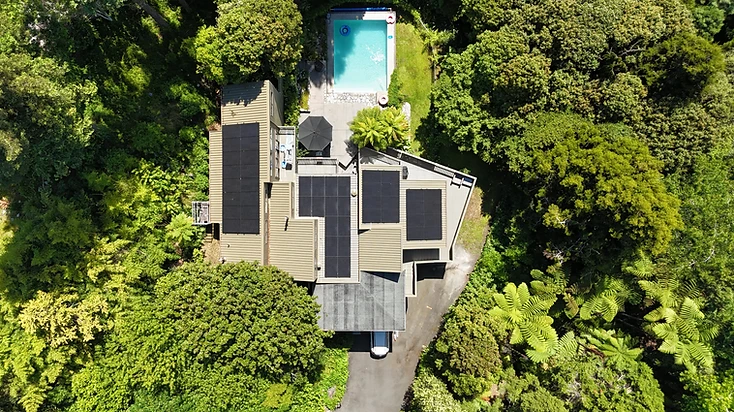
This Queenwood home has an 18 kW solar system across north-facing, flat and south-facing roof areas.
From 1 January to 30 September 2026, the system generated approximately 10,795 kWh.
7,713 kWh
North + flat array
3,082 kWh
South-facing array
10,795 kWh
Combined generation
The property also gives us actual electricity retailer bills from before and after solar.
Before solar
9 January to 9 February 2025
- Imported from the grid
- 1,645 kWh
- Electricity charge after discounts
- $475.25
With the complete solar system operating
11 January to 8 February 2026
- Imported from the grid
- 506 kWh
- Exported to the grid
- 1,100 kWh
- HomeGen export credit
- $137.50
- Electricity charge after discounts
- $81.95
These are actual results from one Hamilton property. Billing periods, electricity rates and household electricity use vary, so these figures should not be treated as a guaranteed saving for another home.
The Big Factors
What Can Improve the Solar Result?
Good Daytime Electricity Use
Homes that can use more electricity while solar is being generated may be able to use more of their own production directly.
Appropriate System Size
Bigger isn't automatically better. The system should be designed around the home's electricity demand, roof and objectives.
Suitable Roof Space
Orientation, pitch and shading affect generation.
Electric Hot Water
Hot water can be a significant household load and may provide opportunities to use solar generation during the day.
Pool Pumps and Heating
Where appropriate, some loads can be scheduled into solar-generation hours.
EV Charging
An EV at home during daylight hours may create a useful solar load.
Electricity Rates
The difference between what you pay to import electricity and what you're paid to export solar affects the result.
Installation Cost
A well-priced system can produce a very different payback result from an unnecessarily expensive one.
Finance Cost
How the system is funded can materially affect the overall financial outcome.
How You Pay Matters
Check Your Bank Before Paying Cash or Using Standard Finance
Several New Zealand banks currently offer special lending for eligible home energy upgrades, including solar.
Westpac Greater Choices
Up to $50,000
0% interest for 5 years
Eligible upgrades currently include solar power systems and batteries.
ASB Better Homes Top Up
Up to $80,000
1% p.a. fixed for 3 years
Eligible upgrades currently include residential solar.
BNZ Better Future
Up to $80,000
1% p.a. fixed for 3 years
Available for eligible sustainable home upgrades.
ANZ Good Energy Home Loan
Up to $80,000
Available for eligible energy upgrades including solar and batteries.
Kiwibank Sustainable Energy Loan
Kiwibank's programme works differently. For eligible sustainable energy loans over $5,000, its current programme can contribute up to $2,000 over four years, subject to eligibility.
Bank offers, rates and eligibility can change. Check the current offer directly with your bank. Lending criteria, terms and conditions apply.
2E Electrical is an electrical contractor, not a financial adviser or lender.
What to Watch
When Solar May Take Longer to Pay Back
High Installation Cost
Paying significantly more for the same useful generation can extend payback.
Poor System Sizing
A system that is poorly matched to the home's electricity use may export a large proportion of its generation.
Significant Shading
Heavy shading can reduce generation and needs to be considered during design.
Low Electricity Consumption
A home with very low electricity demand may have less opportunity to offset grid electricity.
Expensive Finance
High interest costs can materially affect the overall result.
Changes in Electricity or Export Rates
Future electricity prices and export rates aren't guaranteed.
This doesn't automatically mean solar is a bad idea. It means these factors should be included in the assessment rather than ignored.
Solar + Storage
Does Adding a Battery Make Solar More Worthwhile?
Not automatically.
A battery can store surplus solar for use later, but it also adds significant cost to the installation.
Whether battery storage improves the overall result depends on:
- How much surplus solar is available
- When the home imports electricity
- Import and export rates
- Battery capacity
- Battery power
- Installed battery cost
- Backup requirements
- What the homeowner wants the system to achieve
We'd rather assess the numbers first than assume every solar home needs a battery.
Solar now, battery later?
Solar Now, Battery Later?
For some homes, installing solar first and considering battery storage later can be a sensible approach.
If a battery is likely in the future, tell us during the original solar design so equipment compatibility and future expansion can be considered.
The right approach depends on the home and what you're trying to achieve.
More Than Payback
Solar Isn't Always Just About the Payback Period
Homeowners can have other reasons for installing solar.
- Reducing reliance on purchased grid electricity
- Making better use of roof space
- Preparing for increased electricity use
- EV charging
- Future battery storage
- Moving more household energy use to electricity
- Better visibility of household energy use
The Bottom Line
It Depends on the Home, but We Can Work It Out
For the right Hamilton property, solar can significantly reduce the amount of electricity purchased from the grid.
But we don't think the answer should come from a generic online package or a salesperson promising a particular payback.
Start with:
- Your electricity bills
- Your roof
- When you use electricity
- What you expect to change in the future
- What the system will cost
- How it will be financed
Then design the solar around those numbers.
That's what our Free Solar Assessment is for.
Common Questions
Is Solar Worth It? Common Questions
Free Solar Assessment
Let's Look at Your Actual Numbers
Send us a recent electricity bill and a few details about your Hamilton property. We'll use that as a starting point to assess what size system may suit the home and whether solar makes sense for the way you use electricity.