
Solar Batteries Hamilton
Solar Battery Storage for Hamilton Homes
Store more of your solar and use it when your home needs it.
A home battery can store surplus solar generation for use later, but whether one makes sense depends on how your home actually uses electricity.
2E Electrical installs solar and battery systems in Hamilton and can also assess battery options for homes with existing solar.
We'll look at your solar generation, grid imports, exports, electricity rates and what you want the battery to achieve before recommending a system.
The Basics
What Does a Home Battery Do?
During the day, solar panels generate electricity.
Your home uses available solar first.
When generation exceeds what the home needs, that surplus would normally be exported to the grid.
With a compatible battery system, some of that surplus can instead be stored and used later.
1
Generate
Solar panels produce electricity.
2
Use
Your home uses available solar generation.
3
Store
Surplus solar can charge the battery.
4
Use Later
Stored energy can be used when solar generation falls or household demand increases.
A battery doesn't create additional solar energy. It changes when some of your generated electricity can be used.
Honest Assessment
Do You Actually Need a Battery?
Not necessarily.
Some homes can make very good use of solar without battery storage.
A battery becomes more interesting when there is a regular mismatch between when the solar system produces surplus electricity and when the household needs electricity.
Before recommending one, we look at:
- How much solar is being exported
- How much electricity is being imported
- What time of day grid electricity is being used
- Electricity import rates
- Solar export rates
- Battery capacity
- Battery power output
- Installed cost
- Backup requirements if applicable
- Expected future loads such as an EV
We'd rather tell you a battery doesn't stack up yet than sell you one just because you have solar.
Solar + Battery From Day One
Installing Solar and a Battery Together
If you're installing a new solar system and already know you want battery storage, we can design the complete system together.
That means considering the panels, inverter, battery, switchboard, household loads and monitoring as one electrical system.
- Solar system sizing
- Battery capacity
- Compatible inverter/system design
- Switchboard requirements
- Monitoring
- Backup options where supported
- EV charging and future electrical loads
Adding a Battery to Existing Solar
Already Have Solar?
You don't necessarily need to replace your existing solar system to investigate battery storage.
The first step is to identify what equipment is already installed and how the existing system is configured.
We can assess:
- Existing inverter
- Solar array size
- Switchboard
- Available supply
- Existing monitoring
- Export levels
- Grid imports
- Battery compatibility
- Options for integrating storage
Some existing systems are easier to add batteries to than others. We'll check what you already have before recommending the best approach.
Battery Size
What Size Battery Does a Home Need?
Battery size should be based on what you're trying to achieve, not simply matched to the size of the solar array.
A larger battery isn't automatically better.
Some of the factors we look at:
Evening Electricity Use
How much electricity does the home typically use after solar production drops?
Available Surplus Solar
There needs to be enough surplus generation available to charge the battery.
Battery Power
Capacity in kWh and power output in kW are different. Both can matter depending on the loads you want the battery to support.
Backup
If backup during an outage is important, the system needs to be designed around which circuits or loads need to operate and what the selected equipment supports.
Future Loads
An EV, additional heat pump, electric hot water or other future loads can change the calculation.
We size batteries from the home's actual usage and objectives rather than offering one standard battery package.
Real Hamilton Example
A Real Hamilton Home Exporting Surplus Solar

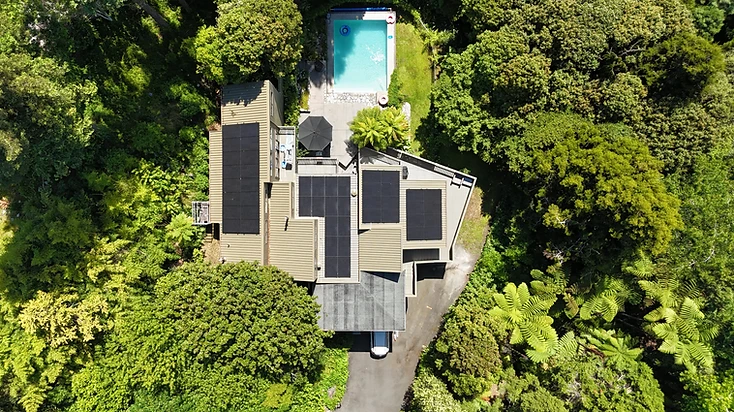
Our Queenwood case study currently operates without a battery.
During the Genesis billing period from 11 January to 8 February 2026, the home:
1,100 kWh
Exported to the grid
506 kWh
Imported from the grid
That doesn't automatically mean the home needs a battery.
It does mean there is enough real import and export data to properly assess what storage could achieve.
We can look at when that 506 kWh was imported, when the surplus solar was available, the electricity rates and the cost of suitable battery storage before deciding whether adding a battery makes sense.
Battery Backup
Will a Solar Battery Keep the House Running in a Power Cut?
It depends on the battery system and how it is installed.
Having a battery does not automatically mean every circuit in the house will continue operating during an outage.
Backup capability needs to be designed around the equipment being installed, the available battery power and the loads that need to remain operational.
Depending on the system, this may involve selected essential circuits rather than the entire house.
We'll explain what the proposed system can and cannot run before installation.
Making the Right Call
Battery or More Solar?
Sometimes homeowners have limited budget and need to decide whether to install more panels, add a battery, or do both.
There isn't one answer that suits every home.
More solar can increase the amount of electricity generated.
A battery can increase the amount of generated electricity available for use later.
The better option depends on the existing system, available roof space, export, electricity use and what the homeowner is trying to achieve.
If you're still working out whether solar suits your home, our home solar page covers how we design residential systems.
EV Charging and Batteries
Battery Storage and EV Charging
If you have an EV or plan to get one, include it in the conversation.
EV charging can significantly change household electricity demand.
Depending on when the vehicle is at home, direct daytime solar charging may be useful. In other situations, battery storage, controlled charging or electricity tariffs may need to be considered.
We'll look at the solar, battery and EV charger as parts of the same electrical system.
Why 2E Electrical
Battery Storage Is Electrical Work
2E Electrical is an established Hamilton electrical contractor.
We can assess and carry out the electrical work around the battery installation, not just supply the equipment.
- Solar systems
- Battery storage
- Inverter installation
- Switchboard work
- Electrical upgrades
- EV chargers
- Testing and certification
- System monitoring
- Local support
FAQ
Solar Battery Questions
Something else on your mind? Ask us during a battery assessment.
Free Battery Assessment
Find Out Whether Battery Storage Makes Sense for Your Home
Tell us about your existing solar system, electricity use and what you want a battery to achieve. We'll use that information as a starting point before recommending a system.
Prefer to talk? Call a solar electrician on 0800 233 532.