
Solar System Sizes
What Size Solar System Does Your Hamilton Home Need?
Start with the electricity use, then design the system around the home.
There isn't one solar system size that suits every Hamilton home.
Two similar houses can need very different solar systems depending on how much electricity they use, when they use it, the available roof space and what they plan to add in the future.
2E Electrical looks at the whole property before recommending a system size.
What Determines System Size
We Don't Size Solar From the Number of Bedrooms
The number of bedrooms tells us very little about how much electricity a home actually uses.
A three-bedroom home with an EV, pool, electric hot water and several heat pumps may use considerably more electricity than a much larger home with different loads.
Before sizing a system, we look at:
Annual Electricity Use
Recent electricity bills help show how much energy the property uses through the year.
Daytime Electricity Use
Power used while the panels are generating can often be particularly valuable because it can be consumed directly rather than exported.
Roof Space
Available area, orientation, pitch and shading affect how many panels can be installed and where they should go.
Hot Water
Electric hot water can represent a significant load and may provide opportunities to use solar generation during the day.
Heating and Cooling
Heat pumps, ducted systems and other electric heating loads affect household demand.
Pool
Pool pumps and heating can substantially change daytime electricity use.
EV Charging
An EV can materially increase household electricity consumption.
Future Plans
A future EV, battery, electric hot-water upgrade, additional heat pump or other load should be considered before the system is designed.
The Two Units, Explained
kW and kWh Aren't the Same Thing
These two terms get mixed up constantly, and it makes solar conversations more confusing than they need to be. Here's the simple version.
kW
Power, or system capacity
A solar system described as 8 kW has approximately 8 kW of installed solar panel capacity.
kWh
An amount of energy
If a solar system generates 30 kWh during a day, that is the total amount of electrical energy produced over that period.
One thing worth knowing
A 10 kW solar system does not produce 10 kWh every hour all day. Solar production changes with the time of day, season, weather, roof orientation, pitch and shading.
That's why system size is a starting point, not a promise of daily output. We'll talk you through what a system of a given size is realistically likely to generate at your property.
Common Residential Sizes
Common Home Solar System Sizes
These are examples to help explain the scale of different systems. They are not standard 2E Electrical packages.
5 kW
Around 5 kW
A system around 5 kW may suit a home with lower electricity consumption, limited suitable roof area or relatively modest daytime loads.
It may also suit a homeowner who wants to start with solar while keeping the overall system smaller, particularly if a battery or an expansion could be added later.
6 kW
Around 6 kW
A system around 6 kW may suit a home with moderate electricity consumption, useful daytime loads and suitable roof space.
Whether this size makes sense depends on the home's actual electricity use, when that power is used and the available roof space.
8 kW
Around 8 kW
A system around 8 kW may suit homes with higher overall electricity use, such as properties charging an EV at home, running a pool, or using ducted heating alongside other loads.
A system of this size generally needs a generous amount of usable roof space, which may include more than one roof orientation.
10 kW
Around 10 kW
A system around 10 kW sits towards the larger end of residential solar. It may suit high-consumption homes, properties with an EV and significant daytime loads, or homes planning to add a battery or further electric loads in the future.
Whether a system of this size makes sense depends on how much of the generation the home can use, export arrangements and the roof space available. We assess all of that before recommending a system this size.
The size isn't the starting point. Your home is.
What we actually recommend comes from your electricity bills, your roof and your plans. The system size is the result of that assessment, not a package chosen from a list.
Panels vs System Size
How Many Solar Panels Will You Need?
The number of panels depends on the wattage of the panels, the size of the system and the layout of your roof.
Panels vary in output, and roofs vary in shape. The same system size could be built from a smaller number of higher-output panels, or more lower-output panels, depending on what suits the available roof space, the shading and the look you're comfortable with.
That's why we don't quote a panel count before we've looked at the property. We work out the array layout, panel positions and system size together, as part of designing the system for your home.
Example only, using 500 W panels:
5 kW
Approximately 10 panels
6 kW
Approximately 12 panels
8 kW
Approximately 16 panels
10 kW
Approximately 20 panels
Actual panel quantities depend on the equipment selected, panel wattage, roof layout and system design.
This example doesn't mean 2E Electrical always uses 500 W panels. We select equipment to suit the roof and the design.
Roof Orientation
Does Every Panel Need to Face North?
No.
North-facing roof areas are generally favourable for solar generation in New Zealand, but they aren't the only roof areas that can be useful.
East and west-facing panels can spread generation across different parts of the day.
South-facing roof space may also be worth considering in some situations, although generation can be lower, particularly through winter.
The right answer depends on the roof, pitch, shading, available area and the overall system design.

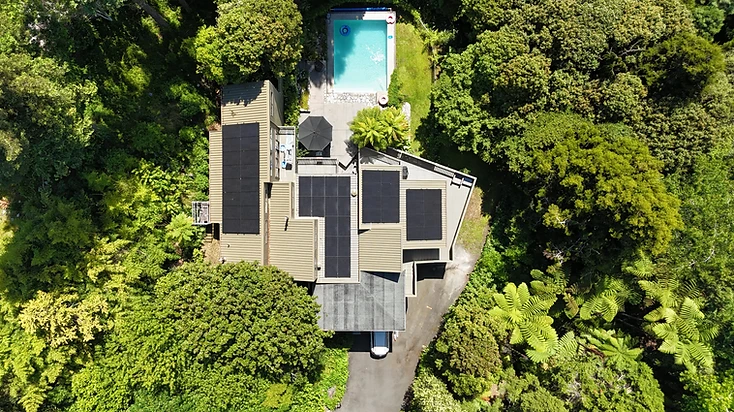
Real Hamilton Data
What About South-Facing Solar?
Our Queenwood case study uses two separately monitored solar arrays:
10 kW
North + flat roof
8 kW
South-facing roof
From 1 January to 30 September 2026, they generated:
7,713 kWh
North + flat generation
3,082 kWh
South-facing generation
10,795 kWh
Combined generation
The south-facing array produced less than the north and flat-roof array, particularly through winter.
But it still generated more than 3,000 kWh in nine months from roof space that could otherwise have gone unused.
This is a good example of why we assess the whole property before deciding how much solar can usefully be installed.
Think Ahead
Should You Size Solar for Today or the Future?
Solar systems can stay on a home for a long time, so it's worth thinking beyond today's electricity bill.
That doesn't mean automatically oversizing the solar system. It means telling us what's likely to change so we can take it into account during the design.
Things worth telling us about:
- Are you likely to buy an EV?
- Could gas hot water be replaced with electric hot water?
- Are you planning another heat pump?
- Could a pool or spa be added?
- Are you considering battery storage?
- Is household electricity use likely to increase?
Solar + Storage
Does the Battery Size Have to Match the Solar Size?
No.
Solar capacity and battery capacity are different parts of the system.
The solar array determines how much electricity can be generated. Battery capacity determines how much energy can be stored.
Battery sizing should consider surplus solar generation, evening and overnight electricity use, required battery power, backup objectives and installed cost.
Future Loads
Planning an EV? Include It in the Solar Design
An EV can become one of the larger electrical loads in a home.
If the vehicle is regularly at home during the day, direct solar charging may be useful.
If charging mainly happens at night, the energy strategy may look different.
Tell us about current or planned EVs before we size the solar system.
Our Approach
How 2E Electrical Sizes Your System
Every assessment follows the same process, and it starts with your property rather than a product.
- 01
Review Your Electricity Bills
Recent bills show how much energy the home uses through the year, and give us a starting point for the conversation.
- 02
Assess Your Roof
We look at the available roof space, orientation, pitch and shading to work out where panels can realistically go.
- 03
Understand Your Loads and Timing
Hot water, heating, pool pumps, EV charging and when you actually use power all shape what's worth installing.
- 04
Design the System to Fit
We recommend a system size and layout based on your property and your future plans, then quote it clearly.
FAQ
System Size Questions
Something else on your mind? Ask us during your free solar assessment.
Keep Exploring
Free Solar Assessment
Find Out What Size System Suits Your Home
Send us a recent electricity bill and a few details about your property. We'll work out what size and type of system may suit your home, rather than starting with a standard package.