
Solar Costs Hamilton
How Much Does Home Solar Cost in Hamilton?
For initial budgeting, around $2,000 per kW is a useful starting point for a straightforward residential solar installation.
The actual cost depends on the system size, equipment, roof, access and any electrical work required.
As a practical starting point, 2E Electrical generally uses around $2,000 per kW including GST when discussing early residential solar budgets.
That's a guide, not a fixed price.
Once we've looked at the property and electricity use, we can design the system properly and provide a clear quote.
Budgeting Guide
What Should You Budget for Solar?
For a straightforward residential installation, these figures provide a useful starting point.
Around 5 kW
Approximately $10,000 to $12,000
A useful budgeting range for a straightforward installation.
Around 6 kW
Approximately $12,000
Using the 2E Electrical rule of thumb of around $2,000 per installed kW.
Around 8 kW
Approximately $16,000
For initial budgeting before the property and electrical requirements have been assessed.
Around 10 kW
Approximately $20,000
A useful starting point for larger residential systems.
Not a fixed quote
These are indicative budgeting figures including GST, not fixed-price packages. The actual quote depends on the property, equipment and electrical work required.
Independent NZ Guidance
What Does EECA Say Solar Costs?
The Energy Efficiency and Conservation Authority, EECA, publishes independent guidance for New Zealand homeowners considering solar.
EECA currently gives typical installed costs of approximately:
$8,500 to $11,500
for small-to-medium residential systems around 3 to 5 kW.
For a larger 10 kW residential system, EECA's current typical-cost guidance is around:
Around $20,000
Source: EECA Solar Costs and Savings.
That puts 2E Electrical's simple budgeting guide of around $2,000 per kW in a similar range for larger residential systems.
Smaller systems can cost more per installed kW because many installation and electrical costs don't reduce in direct proportion to the number of panels.
Where these figures come from
The $8,500 to $11,500 and around $20,000 figures are EECA's published typical-cost guidance, not 2E Electrical pricing. They're a useful independent check on any budget you're given.
What Affects the Quote
Why Two Similar-Sized Solar Systems Can Cost Different Amounts
These are the main things that move a solar quote up or down.
System Size
More panels and larger equipment generally increase the overall project cost.
Roof Access
Roof height, pitch and access can affect installation time and safety requirements.
Scaffolding and Edge Protection
Some properties require additional access or fall-protection equipment.
Roof Layout
Multiple roof levels, complex roof shapes and several panel orientations can make an installation more involved.
Equipment
Panel, inverter and mounting-system specifications affect the final price.
Switchboard
Some homes need switchboard work before or as part of the solar installation.
Mains and Supply
The existing electrical supply and mains capacity may need to be considered, particularly on larger systems.
Metering
Import/export metering or meter configuration may be required before exported solar can be credited by the electricity retailer.
Network Requirements
Distributed-generation applications and network requirements form part of connecting a grid-tied solar system.
Battery Storage
Adding a battery substantially changes the equipment and installation cost.
This is one reason we prefer to assess the property rather than advertise a one-size-fits-all solar package.
Compare Like With Like
Make Sure You're Comparing the Whole Job
A cheap headline price isn't much use if important parts of the installation are added later.
EECA recommends checking that a solar quote clearly accounts for relevant costs such as:
2E Electrical can also identify associated electrical work, such as switchboard changes, as part of assessing the installation.
- Scaffolding or edge protection if required
- Solar panels
- Inverter
- Mounting and racking
- Cabling
- Controllers and protection equipment
- Necessary roof work
- Required inspections
- Network or distribution requirements
- Import/export metering
- Battery installation if included
Battery Cost
How Much Does a Solar Battery Add?
Battery pricing varies considerably depending on storage capacity, power output, system design and whether backup capability is required.
EECA typical NZ guidance
$5,000 to $15,000
EECA currently advises that adding battery storage to a home solar installation can typically add approximately this much, depending on the battery capacity and type.
This is EECA's general New Zealand guidance, not a 2E Electrical battery price range.
That range is useful for early budgeting, but we wouldn't quote a battery from capacity alone.
We first need to understand what you want the battery to achieve, how much surplus solar is available, when the home imports electricity and whether backup is important.
The Electrical Side
Solar Is Part of Your Home's Electrical System
The panels are only one part of the job.
The inverter needs to be connected into the home's electrical system, protection needs to be correct, the switchboard needs to be suitable and the completed work needs to be tested and certified.
If other electrical work is required, 2E Electrical can handle that as part of the project.
We'd rather identify the electrical work at the start than surprise you with it after you've accepted a quote.
What a 2E Electrical solar project covers:
- Solar installation
- Inverter installation
- Switchboard upgrades where required
- Electrical protection
- Testing and certification
- Network connection requirements
- Monitoring setup
- Local support
Economies of Scale
Why Larger Systems Can Cost Less Per kW
Not every part of a solar installation scales directly with the number of panels.
There are costs involved in designing, travelling to, setting up, connecting, testing and certifying an installation whether the system is relatively small or large.
That means a smaller solar system can have a higher cost per installed kW than a larger system.
This is also reflected in EECA's typical New Zealand cost guidance.
Green Home Finance
Solar May Be Eligible for 0% or 1% Home Loan Top-Ups
For homeowners with an existing mortgage, one of the first things worth checking is whether your bank offers low-interest lending for solar.
Several major New Zealand banks currently offer special home-loan top-ups for eligible energy-efficiency upgrades.
Solar panels and batteries can qualify under some of these programmes.
Before paying cash or using standard finance, check what your bank offers for solar.
Westpac Greater Choices
Up to $50,000
0% interest for 5 years
Eligible upgrades currently include solar power systems and batteries.
ASB Better Homes Top Up
Up to $80,000
1% p.a. fixed for 3 years
Eligible upgrades currently include residential solar.
BNZ Better Future
Up to $80,000
1% p.a. fixed for 3 years
Available for eligible sustainable home upgrades.
ANZ Good Energy Home Loan
Up to $80,000
Available as a special home-loan top-up for eligible energy upgrades including solar panels and solar batteries.
Kiwibank Sustainable Energy Loan
Kiwibank's programme works differently from the 0% and 1% top-ups. For eligible sustainable energy loans over $5,000, Kiwibank currently states that it can contribute up to $2,000 over four years, subject to eligibility requirements.
Rates and offers shown are each bank's current advertised offer and are subject to change. Check the bank's own page for the latest details.
A $20,000 Solar System Doesn't Necessarily Mean Finding $20,000 in Cash
Using our approximate budgeting guide, a straightforward 10 kW residential solar system might be around $20,000 including GST.
For an eligible homeowner, a bank's green home-loan top-up may provide another way to fund that installation rather than paying the full cost upfront.
Before choosing finance, check:
- Whether you're eligible
- Maximum borrowing amount
- Interest rate
- How long the special rate lasts
- What rate applies after the special period
- Required home equity
- Minimum loan amount
- Which solar and battery products qualify
- Whether an approved or SEANZ installer is required
- Whether the work must be quoted or approved before installation
- Fees and early repayment conditions
Bank offers, rates and eligibility can change. The information above is a general guide only. Check the current offer directly with your bank before making a financial decision. Lending criteria, terms and conditions apply.
2E Electrical is an electrical contractor, not a financial adviser or lender. We can provide the solar quote and technical information your bank may require, but finance approval and advice need to come from the lender or your financial adviser.
Cost Is Only Half the Question
What Will You Actually Get Back From It?
The installation price matters, but it doesn't tell you whether solar is worthwhile on its own.
The financial result also depends on:
- How much electricity the system generates
- How much solar you use directly
- How much you export
- Your electricity import price
- Your solar export rate
- How your electricity use changes over time
- Maintenance and future equipment costs
- How the system is financed
Electricity used directly in the home can be worth more than exported electricity because it replaces electricity you would otherwise have bought from the grid.
EECA's solar payback calculator uses information about the home, electricity use, system size and installation cost to estimate potential first-year savings and payback.
EECA states that the calculator is a guide and shouldn't be relied on as the sole basis of a purchasing decision.
Real Results
Actual Bills From a Hamilton Solar Home
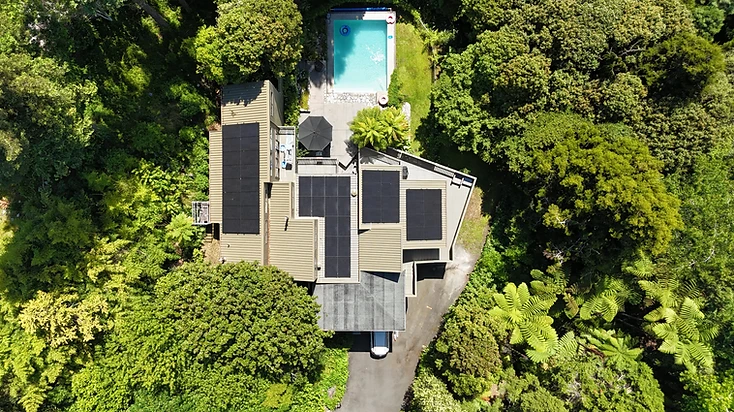
Our Queenwood case study gives us actual system monitoring and electricity retailer bills rather than a projected savings figure.

Before Solar
9 January to 9 February 2025
1,645 kWh
Imported from the grid
$475.25
Electricity charge after discounts
With the Complete Solar System Operating
11 January to 8 February 2026
506 kWh
Imported from the grid
1,100 kWh
Exported to the grid
$137.50
HomeGen export credit
$81.95
Electricity charge after discounts
These are actual results from one Hamilton property. Billing periods, electricity rates and household electricity use vary, so they should not be treated as a guaranteed saving for another home.
FAQ
Solar Cost Questions
Something else on your mind? Ask us during your free solar assessment.
Free Solar Assessment
Get a Solar Price for Your Home
Send us a recent electricity bill and a few details about your property. We'll use that as a starting point to work out an appropriate system size and provide a clear quote based on the actual installation.