Understanding solar generation in Hamilton
When you start looking into home solar, it is easy to get caught up in theoretical peak output figures. In reality, how much power your system generates depends on a combination of your roof design, the local climate in Hamilton, and how your household uses electricity. As an electrical contractor that has installed systems across the Waikato, we prefer to talk about annual kilowatt-hour (kWh) production rather than simple panel wattage.
The impact of seasons on your output
Hamilton experiences significant variance in daylight hours between summer and winter. You should expect your solar system to produce significantly more energy during the long, sunny days of December and January compared to the shorter, often cloudier days of June and July. Solar generation is not a flat line; it is a curve that tracks the sun across the year.
Roof orientation and shading
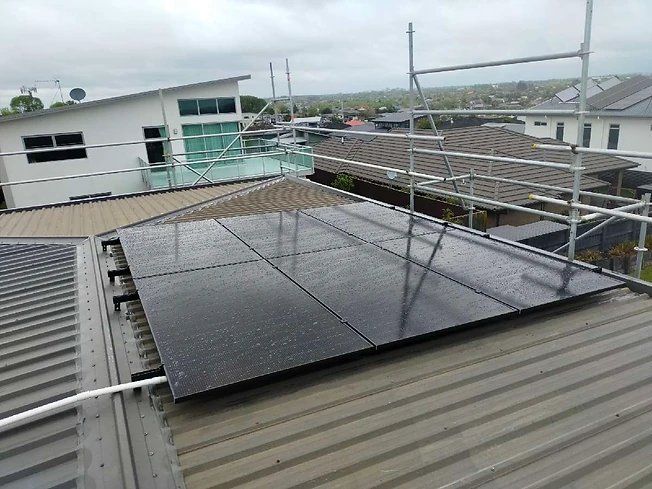
Orientation is one of the most critical factors. A north-facing roof captures the most consistent sunlight throughout the day. However, many Hamilton homes have complex roof lines that require panels to be placed on east, west, or even south-facing aspects. While a south-facing array will generate less power than a north-facing one, it is still capable of contributing to your total energy needs. For example, in our Queenwood home solar case study, the south-facing array contributed approximately 29% of the total measured output for the period between January and September 2026. This shows that while north is optimal, other orientations still perform.
Shading is another major variable. Trees, chimneys, and neighbouring buildings can significantly drop your production if they cast shadows during peak sunlight hours. During our site assessments, we carefully evaluate these obstructions to ensure your system design is as efficient as possible for your specific roof.
Why household behaviour matters
A solar system's true value is realised when you match your power consumption with your generation. Because solar panels only produce electricity when the sun is shining, your system is most effective when you run high-energy appliances, like washing machines, dishwashers, or pool pumps, during the middle of the day. If you are away at work during these hours, you may find that much of your generated power is exported to the grid rather than powering your home directly. Understanding your daily habits is just as important as the size of the system you install. You can learn more about finding the right fit for your home on our solar system sizes page.
Maintaining your system's performance
Every roof and every installation is unique. While some homeowners believe that rain handles all cleaning requirements, this is not always the case. Rain helps wash away loose dust, but bird droppings, grime, or organic growth from nearby trees can stick to panels and impact efficiency. We recommend keeping an eye on your monitoring data. If you notice a persistent drop in production that cannot be explained by seasonal changes or shading, it might be time for a professional check. We specialise in residential solar services, including performance investigations and maintenance, to ensure your system continues to function as expected.